 By Bemi Brooks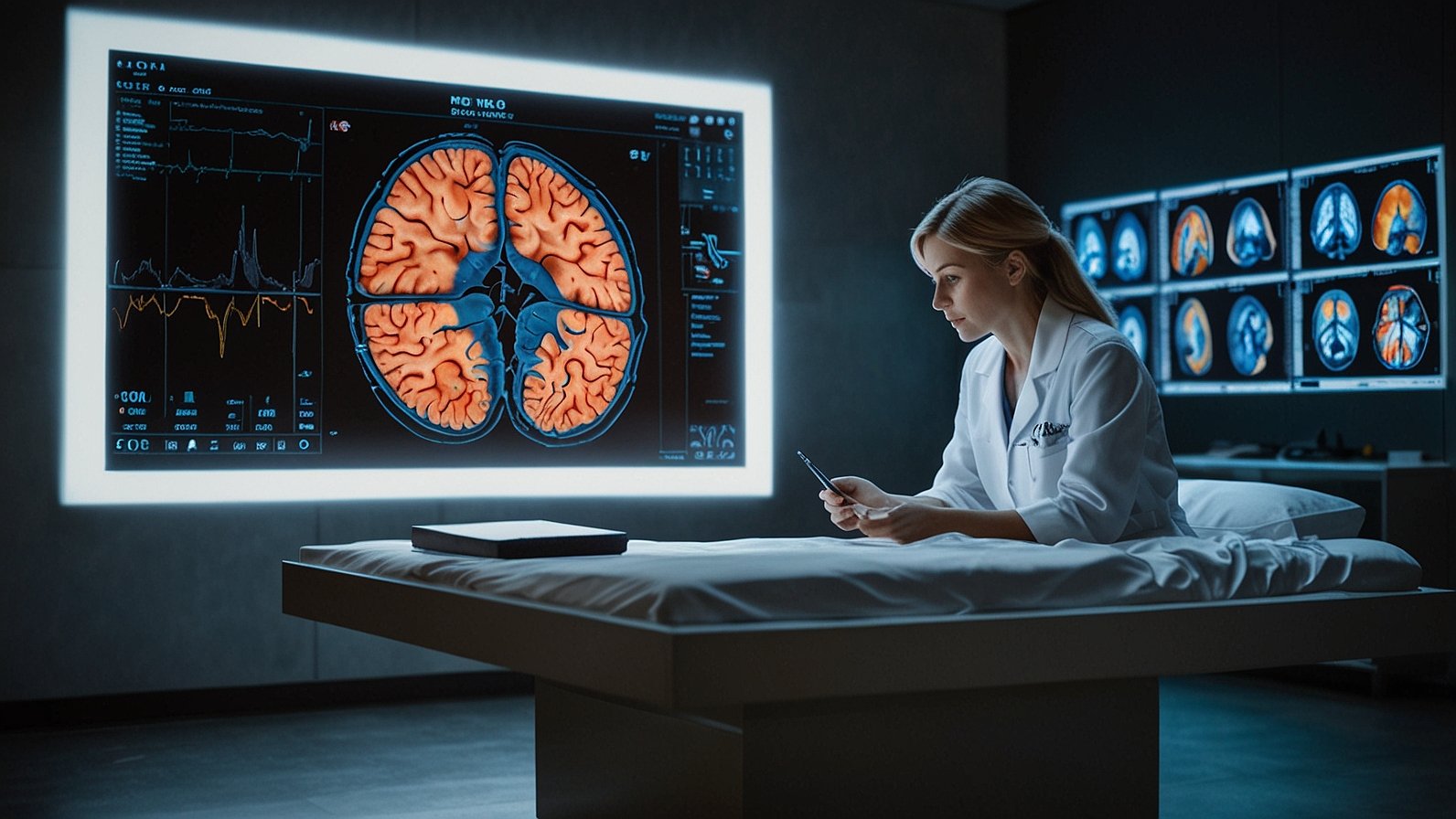
Have you ever had a mysterious pain or a lingering cough and wished you could just see inside your own body to find the answer? It sounds like science fiction, but it’s exactly what doctors do every single day. Welcome to the world of the diag image—a powerful, non-invasive window into your health that helps solve medical mysteries, guide treatments, and save lives.
Think of your body as a complex, high-tech machine. When a warning light flashes on your car’s dashboard, a mechanic hooks it up to a computer to read the diagnostic codes. A diag image does the same thing for your doctor, providing a detailed internal report without ever needing to pick up a scalpel. In this guide, we’ll walk you through everything you need to know, from the basic “cameras” doctors use to what you can expect during your own scan. Let’s pull back the curtain.
First things first, let’s clear up a common misconception: a diag image isn’t just one thing. It’s a whole family of technologies, each with its own special talent. At its core, every type of diagnostic imaging has the same goal: to create a visual representation of what’s happening inside you.
These images help doctors:
- Detect diseases early, often before you even have symptoms.
- Diagnose the cause of your symptoms accurately.
- Monitor how a disease is progressing or how well a treatment is working.
- Guide procedures like biopsies, surgeries, or the placement of stents.
It’s a bit like having a team of superheroes, each with a unique power. Some are great at looking at bones, while others excel at visualizing soft tissues like your brain or liver.
Let’s meet the key players in the diagnostic imaging lineup. We’ll break down how they work, what they’re best for, and what the experience is like for you.
How it works: X-rays are a form of electromagnetic radiation. Dense materials like bones absorb the radiation and appear white on the final image, while softer tissues (like muscle and fat) allow the rays to pass through and show up as shades of gray.
- What it’s best for: Finding broken bones, checking for pneumonia in the lungs, spotting cavities in your teeth, and mammograms (a specialized X-ray for breast cancer screening).
- What to expect: It’s usually very fast. You’ll stand, sit, or lie down, and a technologist will position you. You need to hold still for a moment while the machine clicks. You might be asked to wear a lead apron to protect other parts of your body.
How it works: Imagine an X-ray that takes hundreds of pictures as it spins around you. A powerful computer then stitches these “slices” together to create incredibly detailed, 3D cross-sectional images of your bones, blood vessels, and soft tissues.
- What it’s best for: Diagnosing internal injuries from car accidents, detecting cancers, spotting blood clots, and guiding surgeries. It’s like slicing a loaf of bread to see each individual slice.
- What to expect: You’ll lie on a table that slides into a large, doughnut-shaped machine. The machine might hum or whir as it rotates. Sometimes, a contrast dye is injected or given as a drink to make certain areas “light up” more clearly.
How it works: An MRI uses a powerful magnet and radio waves to create images. It’s exceptional at showing the difference between various types of soft tissues. Think of it as a way to see the body’s “water content”—it brilliantly visualizes the brain, spinal cord, muscles, and ligaments.
- What it’s best for: Examining brain tumors, torn ligaments, spinal cord injuries, and joint problems. It provides much greater detail for soft tissues than a CT scan.
- What to expect: You’ll lie on a table that slides into a long, narrow tube. The machine is very loud, so you’ll be given earplugs or headphones. The key here is to stay perfectly still. Because of the strong magnet, you’ll be screened for any metal implants beforehand.
How it works: Ultrasound uses high-frequency sound waves, much like a submarine uses sonar. A technician places a probe on your skin, which emits sound waves. The echoes that bounce back are translated into real-time moving images on a screen.
- What it’s best for: Monitoring pregnancies, examining organs like the heart (echocardiogram), liver, and kidneys, and assessing blood flow. It doesn’t use radiation, making it very safe.
- What to expect: You’ll lie on a table, and a clear, warm gel is applied to your skin to help the probe make good contact. The technologist moves the probe around, and you can often see the images live on a screen.
How it works: This is a bit different. For these scans, a small amount of a radioactive tracer is injected into your body. This tracer accumulates in the areas doctors want to examine. Special cameras then detect the radiation and create images that show how your organs and tissues are functioning, not just what they look like.
- What it’s best for: A PET scan is often used in oncology to see if cancer has spread, as cancer cells absorb the tracer more actively. SPECT scans are commonly used to look at blood flow to the heart or brain activity.
- What to expect: There’s a waiting period after the injection for the tracer to circulate. The scan itself involves lying still on a table while the camera rotates around you.
To make it easier, here’s a table that compares these key imaging technologies side-by-side.
| Technology | How It Works | Best For | Key Thing to Know |
|---|---|---|---|
| X-Ray | Radiation | Bones, Lungs, Teeth | Very fast and widely available. |
| CT Scan | Rotating X-rays | Trauma, Cancer, Internal Bleeding | Provides detailed 3D images. |
| MRI | Magnet & Radio Waves | Brain, Spinal Cord, Joints | Excellent for soft tissue; no radiation. |
| Ultrasound | Sound Waves | Pregnancy, Heart, Abdominal Organs | Safe, real-time, and radiation-free. |
| Nuclear Medicine | Radioactive Tracer | Cancer Spread, Organ Function | Shows metabolic activity, not just structure. |
A lot of people feel anxious before a scan, but knowing what to expect can make a world of difference. Here’s a quick rundown of how to prepare.
- Ask Questions: Don’t be shy! Your doctor and the imaging technologists are there to help. Ask why the test is needed, what the risks and benefits are, and what you should do to prepare.
- Follow Instructions Carefully: Preparation varies wildly. An MRI might require you to remove all metal, while a CT scan might require you to fast or drink a contrast agent. Following instructions is crucial for getting clear, usable images.
- Communicate Your Needs: If you are claustrophobic (common with MRI), pregnant, or have any implants, tell your doctor and the technologist ahead of time. They can often provide solutions, like an open MRI machine or a sedative.
- Stay Still: This is the golden rule. Blurred images are often caused by movement and might need to be retaken.
- Wear Comfortable, Metal-Free Clothing: Skip the jewelry, zippers, and underwire bras. Sweatpants and a t-shirt are perfect.
- Bring Your History: Have a list of your medications, allergies, and previous surgeries handy.
- Arrive Early: You’ll often have paperwork to fill out, and preparation can take time.
- Voice Your Concerns: If you’re feeling anxious, cold, or uncomfortable in any way, speak up. The technologists are used to it and want to help you.
- Ask About the Results: Don’t leave in the dark. Ask when and how you will receive the results and who will explain them to you (usually your referring doctor).
From the simple X-ray that confirms a broken wrist to the sophisticated PET scan that tracks the spread of cancer, the world of diag image technology is truly remarkable. These tools have fundamentally changed modern medicine, allowing for earlier detection, more accurate diagnoses, and less invasive treatments. They turn guesswork into knowledge and fear into understanding.
The next time you or a loved one needs one of these scans, we hope you’ll feel more informed and empowered. It’s not just a picture; it’s a story about your health.
What’s your take? Have you had an experience with one of these scans that you found surprising or enlightening? Share your story in the comments below!
You May Also Read: Ovppyo: Stop Fighting Your Tech, Start Making It Work For You
Are all these imaging scans safe?
Generally, yes. The benefits of an accurate diagnosis almost always outweigh the small risks. X-rays and CT scans use ionizing radiation, but the doses are carefully controlled to be as low as possible. MRI and Ultrasound use no ionizing radiation at all. Your doctor will choose the safest, most effective test for your specific situation.
Which is better, a CT scan or an MRI?
It’s not about one being “better” than the other; they have different specialties. CT scans are typically faster and better for looking at bones, bleeding, and the lungs. MRIs are superior for examining soft tissues like the brain, spinal cord, and joints. It’s like asking whether a screwdriver is better than a hammer—it depends on the job.
How long does it take to get results?
This can vary. For a simple X-ray in an emergency room, a doctor might read it within the hour. For more complex scans like an MRI or CT, a specialized doctor called a radiologist needs to interpret the images and write a report for your doctor. This process usually takes a few days.
Why do I sometimes need an injection or to drink a “contrast” liquid?
Contrast agents are like a highlighter for your insides. They help certain areas—like blood vessels, organs, or tumors—stand out more clearly against the surrounding tissues in the image, making it much easier for the radiologist to spot any abnormalities.
Can I get a scan if I think I’m pregnant?
You must always tell your doctor and the technologist if you are or might be pregnant. They will then make a careful decision. Ultrasound is perfectly safe. For X-rays and CT scans, they will shield your abdomen or consider postponing the test. MRIs are generally avoided in the first trimester unless absolutely critical.
What’s the difference between a radiologist and a radiology technologist?
A great question! The radiology technologist is the expert who operates the imaging machine and positions you correctly to capture the best possible images. The radiologist is a medical doctor who specializes in interpreting those images to make a diagnosis.
Is it true that an “Open MRI” is less claustrophobic but also less accurate?
Open MRIs are a fantastic option for people with severe claustrophobia or larger body types. While traditional “closed” MRIs generally produce the highest image quality, modern open MRI technology has improved dramatically and provides excellent diagnostic quality for most common studies. Your doctor and radiologist will know if an open MRI is suitable for your specific medical question.
 John Arthur
  Prime Star
  Apex Backlinks