 By John Arthur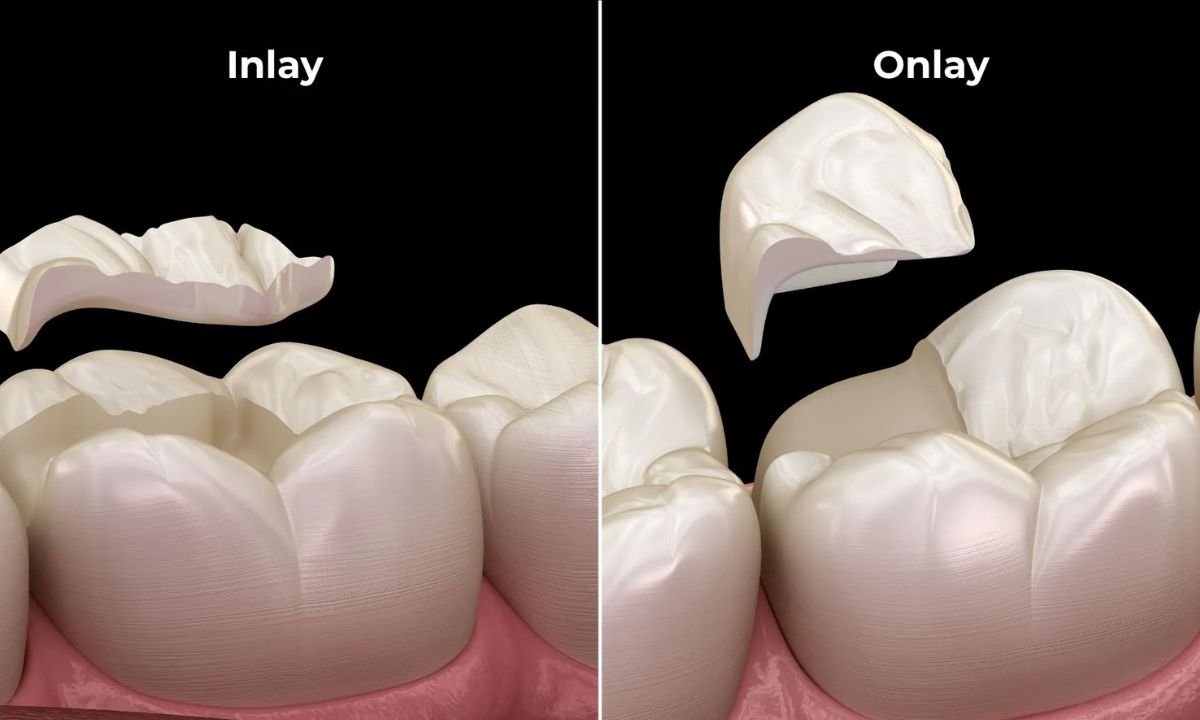
When a tooth becomes damaged by decay or fracture, a dentist may recommend a restoration to rebuild and protect it. While small cavities are usually treated with fillings and severely damaged teeth may require crowns, there is another option for moderate damage: inlays and onlays.
Inlays and onlays are custom-made restorations designed to repair teeth while preserving as much natural tooth structure as possible. They are often considered a middle option between a filling and a full dental crown.
An inlay is a restoration that fits inside the grooves of a tooth, usually on the chewing surface of a back tooth such as a molar or premolar. It is used when the damage or decay is too large for a simple filling but does not affect the outer cusps (the raised points) of the tooth.
Inlays are carefully designed to fit precisely into the prepared cavity of the tooth. They are typically made in a dental laboratory using materials such as porcelain, composite resin, or gold.
Once the inlay is ready, it is bonded to the tooth with a strong dental adhesive, restoring the tooth’s shape and function.
An onlay is similar to an inlay but covers a larger area of the tooth. In addition to filling the cavity, it also covers one or more of the tooth’s cusps. Because it extends over the chewing surface, it provides additional protection for teeth that are more extensively damaged.
Onlays are sometimes referred to as partial crowns because they restore a larger portion of the tooth while still preserving more natural structure than a full crown would require.
Like inlays, onlays are custom-made in a dental laboratory and then permanently bonded to the tooth.
Although both restorations serve a similar purpose, the main difference lies in how much of the tooth they cover.
Coverage area
- Inlays fit within the grooves of the tooth and do not cover the cusps.
- Onlays extend over one or more cusps and cover a larger portion of the tooth.
Extent of damage
- Inlays are used when the damage is limited to the centre of the tooth.
- Onlays are used when the tooth requires additional structural support.
Strength and protection
- Onlays generally provide greater reinforcement for weakened teeth because they protect the cusps.
Inlays and onlays can be made from several materials, each with different advantages.
Porcelain or ceramic
These are commonly used because they closely match the natural colour of teeth, making them highly aesthetic.
Composite resin
This material can also blend well with natural teeth and is often used for more conservative restorations.
Gold
Gold restorations are extremely durable and long-lasting, although they are less commonly chosen today due to their appearance.
Inlays and onlays offer several advantages compared with traditional fillings or crowns.
They help preserve more of the natural tooth structure, which is important for long-term dental health. Because they are custom-made, they also provide a very precise fit, helping to restore the tooth’s strength and function.
Additional benefits include:
- Greater durability than large fillings
- Improved protection for weakened teeth
- Natural-looking results when ceramic materials are used
- Strong bonding to the remaining tooth structure
With proper care, inlays and onlays can last for many years.
The procedure for placing an inlay or onlay usually involves two appointments.
During the first visit, the dentist removes decay or damaged tooth structure and prepares the tooth. An impression or digital scan is taken so the restoration can be custom-made in a dental laboratory.
A temporary restoration may be placed while the permanent inlay or onlay is being made.
At the second appointment, the dentist checks the fit of the restoration and bonds it securely to the tooth.
Inlays and onlays are effective solutions for repairing teeth that have moderate damage but do not require a full crown. They provide strength, durability, and a natural appearance while preserving more of the original tooth.
Understanding the difference between inlays and onlays helps patients appreciate why a dentist may recommend one option over another. Both treatments are designed to restore the function of the tooth and protect it from further damage, supporting long-term oral health.
Read Also: How Preventive Care in Dental Plans Can Save Money
 Siam
Siam