 By John Arthur
Traffic service is all about timing. Your crews need to be at the right spot, at the right second, with the right gear. But what if tracking is a mess? Those small gaps turn into massive headaches, missed setups, and frustrated clients.
It’s easy to blame the team, but the truth is simpler: your system is broken. If your operations are held together by duct tape and hope, you’re playing a dangerous game.
Here’s how jobs actually slip away and how to fix it.
Many businesses run on a messy mix of calls, texts, and office whiteboards. It feels “flexible” until it becomes a liability.
When schedules live in five different places, details vanish. The dispatcher notes a Tuesday lane closure, but the crew sees Wednesday on the whiteboard. The address is right, but the start time is buried in a three-day-old text.
Breakdowns happen fast:
- Pocket Schedules: Jobs are written down but never shared.
- Phantom Updates: The plan changes, but nobody tells the boots on the ground.
- Version Control: The office is on Version A; the crew is on Version B.
Without a single source of truth, you’re relying on memory and luck. Centralized tracking ensures everyone has the same facts. No guesswork.
Paper has a habit of disappearing. It gets left in trucks, soaked in coffee, or ruined by rain. But the real problem? Paper is stagnant. It doesn’t reflect reality.
If a client changes the scope at 8:00 AM, but the crew left at 7:00 AM with the old paperwork, you’re in trouble.
When paperwork doesn’t update:
- Crews follow outdated instructions.
- Setups take longer because they’re working off the wrong plan.
- You’re stuck making return trips to fix preventable mistakes.
Digital tracking keeps instructions and timelines in the cloud. With Field Promax, if the plan changes, the team’s phone buzzes. Simple as that.
If your dispatcher cannot see what is happening in real time, managing the day is basically just educated guessing.
Dispatchers need visibility. When they don’t have it, you run into typical issues like
- Not knowing which crew is still stuck on-site and who is free.
- Assuming a job is complete when it is actually only half done.
- Missing opportunities to reassign work because you don’t know where anyone is.
This lack of clarity causes delays that ripple through the entire schedule. One missed traffic service job can disrupt three others, especially during busy construction periods. Job tracking software gives dispatchers a clear view of assigned work and job status, making adjustments easier before problems escalate into a crisis.
Every company has that one guy. Let’s call him Dave. Dave knows everything. He knows that the client on Main Street hates early arrivals. He knows exactly which permits are needed for the downtown project.
Dave is great. Until Dave gets sick, goes on vacation, or quits.
Many traffic service companies rely heavily on experienced staff who “just know” the details. The problem is that this information is rarely written down. When those details live only in someone’s head:
- New team members make avoidable (and embarrassing) mistakes.
- Work quality becomes inconsistent.
- Jobs are missed or botched when key staff are unavailable.
Proper job tracking allows you to store notes, photos, and specific instructions directly inside the job record. It effectively clones Dave’s brain so the rest of the team can operate at his level.
Traffic service work often requires follow-up actions after the crew leaves the site. You’re not done just because the cones are down. You might need permit confirmations, completion photos, or client updates.
Without a structured system, the “post-job” phase is where things fall apart:
- Jobs get physically completed but are never closed out in the system.
- Documentation is delayed, forgotten, or lost.
- Billing is pushed back unnecessarily because nobody knows if the job is actually done.
A defined job tracking process ensures every job moves through clear stages, from scheduled to completed to billed. Platforms like Field Promax tie job completion directly to reporting, so nothing is missed, and you get paid faster.
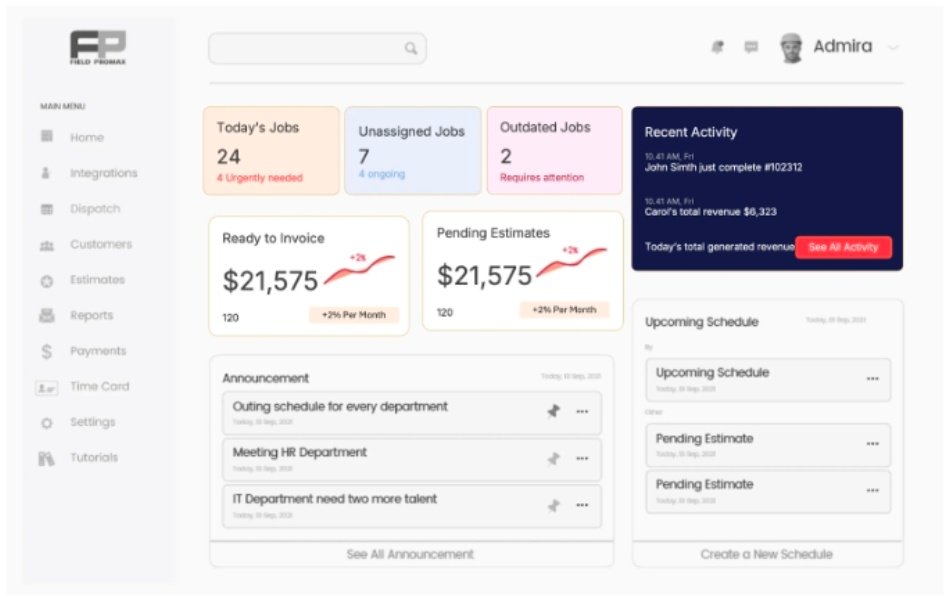
Phone calls and texts are convenient. But they are terrible for accountability. Messages get missed. Calls go to voicemail. Changes are agreed upon verbally but never documented.
This leads to the most dangerous sentences in business:
- “I thought that job was canceled.”
- “I assumed another crew was handling it.”
- “I didn’t see the text.”
Assumption is the enemy of efficiency. Centralized job tracking keeps communication tied to the job itself. If a note is added, it’s there for everyone to see. It reduces guesswork and ensures everyone is looking at the same play.
Missing a traffic service job does more than just annoy your accountant. It damages trust.
For contractors and municipalities, they aren’t just buying cones and signs; they are buying reliability. Missed setups can affect safety compliance, project timelines, and your chances at future contracts.
Internally, missed jobs increase stress. Crews feel blamed for things out of their control. Office teams spend more time putting out fires than planning ahead. Strong job tracking brings stability and accountability across the business.
Effective job tracking does not need to be complicated. You don’t need a NASA-level control center. At a minimum, it includes:
- One Centralized Schedule: Used by everyone, viewable by everyone.
- Clear Job Details: Attached to each appointment, not buried in emails.
- Real-Time Status: Knowing when a job starts and finishes.
- Stored History: Notes and photos stored with the job forever.
- A Closing Process: A defined way to say, “This is done; bill it.”
Many traffic service companies move away from spreadsheets and paper by using field service management software that keeps everything organized in one place.
Consider a traffic control company handling multiple road projects in one week. Let’s look at a realistic scenario.
The Old Way:
One job is written on a whiteboard. Another is buried in an email chain from last week. On Tuesday morning, the crew goes to the whiteboard site. The email site? Totally forgotten. The client calls, upset, wondering where the crew is. The dispatcher scrambles and pulls the crew off the first job, and now two clients are unhappy.
The New Way:
With proper job tracking, both jobs are visible in the same system. Crews check their app and see exact locations and start times. Dispatchers see progress in real time. The day stays on track. The client gets their setup. You get paid.
The difference is not effort. It is clear.
Small teams can sometimes get by with informal processes. You can shout across the office when it’s just three of you. But growth changes that.
As job volume increases, more handoffs occur. More changes need tracking. More mistakes become likely. You cannot scale chaos.
Job tracking provides structure without slowing teams down. Many service businesses adopt tools like Field Promax as a practical step toward organized growth without overwhelming their teams. It’s about building a foundation that can handle the weight of more business.
Traffic service jobs usually slip through the cracks because information is scattered, not because your team isn’t trying. When schedules live on whiteboards, and updates hide in text threads, it’s a recipe for disaster.
Proper job tracking brings every detail into one system. Tools like Field Promax ensure communication flows smoothly, leading to fewer surprises and stronger client trust. When missed jobs become a pattern, the solution isn’t to work harder; it’s to track better.
1. Why do traffic service jobs get missed so often?
Missed traffic service jobs often happen due to poor visibility and scattered information. When schedules and updates are spread across texts, emails, and whiteboards, miscommunication leads to late or missed jobs.
2. Can small traffic service companies benefit from job tracking software?
Absolutely. Small teams often feel the biggest impact. It clears the mental clutter, stops the double-booking nightmare, and keeps those tiny details from falling through the cracks. It’s about building a foundation now so you don’t collapse when business booms.
3. What information should always be included in a tracked job?
At a minimum, every job needs the location, start time, crew assignment, scope of work, and any special requirements. This ensures crews arrive prepared and cuts down on unnecessary calls.
4. How does better job tracking improve customer trust?
On-time jobs with clear communication and documentation build trust. Consistent tracking means fewer surprises, quicker responses, and smoother follow-ups.
 Siam
Siam